
Manufacturing Facilities
Solid Products Manufacturing Facility


This drug manufacturing facility, which opened in 2000 and is dedicated exclusively to the production of non-antibiotic solid products, is of fundamental importance both to the company and to our country. It is one of the few smart pharmaceutical facilities in Latin America and is comparable only to some of those currently operating in Europe and the United States.
Its creation reflects Roemmers’ commitment to investing in the country, consolidating the national pharmaceutical industry to prevent its technological devaluation, meeting the increase in local and regional demand for medicines in the coming years, and creating the necessary conditions to compete in a new globalized scenario with strong international commitments.
It has a covered area of 22,000 m² and a production capacity of 85 million units per year. The total investment for its creation reached USD 65 million, and it operates with 247 highly qualified and trained professionals who operate sophisticated processes and control systems.
The manufacturing facility includes a building for the reception and control of raw materials and supplies, integrated production and packaging plants, and fully automated warehouses.
The basic principles that guided the design of this manufacturing facility were as follows:
- Closed and clean processes that guarantee compliance with GMP standards (production in closed IBC containers).
- Documents and plans in accordance with FDA requirements for product validation (quality assurance) and three-dimensional design, which optimizes space and volume, combining vertical gravity flow with horizontal material flow.
- Environmental protection.
- Introduction of new production technologies.
- Reasonable segmentation into primary (production, packaging) and secondary (social rooms, laboratories, administration, maintenance) sectors, thereby simplifying services (air conditioning and ventilation systems).
- Automation and supervision of all pharmaceutical services through an advanced DAC (Distributed Automatic Control) system, while production management is integrated through the SAP R/3 supervisory system.
The division into completely self-contained areas in terms of air treatment and the movement of people is one of the key features of the new manufacturing facility, where three areas are clearly defined: external black areas (in contact with outside air), internal black areas (clean, with no special air quality requirements), and grey areas (clean, with special air quality requirements).
To comply with the most demanding international health standards, manufacturing procedures, which previously included manual operations, have been replaced by closed technologies that are highly hygienic and have no environmental impact. As a result, products are not exposed to the environment outside the production line, and raw materials are used optimally during their fractionation and subsequent processing.
Environmental care played an important role in the development of the facility. Liquid effluents, mainly from equipment washing water, are processed in a treatment plant. The exhaust air streams are treated using filtration equipment, resulting in virtually zero particulate emissions to the atmosphere. Solid waste is sorted and sent for incineration.
It has been certified as compliant with Good Manufacturing and Control Practices by the national authority ANMAT, valid throughout Mercosur, as well as the equivalent certification granted by INVIMA in Colombia.
Penicillin Antibiotics Manufacturing Facility
Roemmers’ penicillin antibiotics manufacturing facility was first opened in 1992 as a model plant of its kind and expanded in 2007 to increase storage areas, incorporate new technology, and optimize industrial processes, all of which reduce contamination risks and increase its total production capacity.
The manufacturing facility produces AMOXIDAL, AMOXIDAL RESPIRATORIO, OPTAMOX, OPTAMOX DÚO, and various products for export, in accordance with Argentine (ANMAT) and international (FDA, Food & Drug Administration, and EEC, European Economic Community) standards.
In addition to having obtained IRAM certification in GMP, “Good Manufacturing Practices for Oral Penicillin Antibiotics,” it currently maintains ISO 14001 certification granted by DNV (Det Norske Veritas) for its environmental efficiency system, GMP MERCOSUR certification from the Argentine authority, and INVIMA (National Institute for Drug and Food Surveillance) certification from Colombia.
The pharmaceutical facility, with an area of 4,800 m², has a production capacity of 35 million units per year. It operates with a workforce of 90 people, including professionals, technicians, and employees, all of whom are highly qualified and trained.
All pharmaceutical services are verified and supervised by an advanced automatic control system such as DAC (Distributed Automatic Control), while production management is integrated through the SAP R/3 supervisory system, which uses barcode methodology to manage all pharmaceutical operations.
It has a three-dimensional design that saves space and volume, with a vertical gravity flow and a horizontal material flow. Unit operations (grinding, granulation, and mixing) are carried out in closed circuits, with direct transfer of powders from special stainless steel containers to the equipment that generates the different pharmaceutical forms.
Production is carried out using high-speed equipment and electronic quality control systems that automatically monitor all variables under low humidity and controlled temperature conditions (22 to 28% HRA: 20 °C to 25 °C [68 °F to 77 °F]).
It has the following equipment:
- Manufacturing: closed and clean milling/granulation and mixing processes using vacuum loading systems and stainless steel containers that ensure compliance with GMP standards and minimize environmental impact. Transfer of mixtures by gravity directly to the equipment used to produce the various pharmaceutical forms.
- Suspensions: powder fractionation equipment in bottles with controlled gravity feeding from the transfer sector. Vacuum fractionation system: in-line pressure, with a continuous cartoning machine with input, product, and barcode sensors. Final control of the finished product with dynamic scales.
- Tablets: high-speed rotary tablet presses with gravity feed controlled from the transfer sector. Compression system with forced feed and automated variable controls (weight, hardness, thickness), with metal detectors and tablet sorter.
- Blister packaging: continuous sealing blister packaging equipment for PVC/aluminum and aluminum/aluminum with dedicated feeding, product control by color camera, sensors for the presence of different components, barcode readers, and final control with dynamic scales.
- Quality control: the quality control laboratory has specific instruments and high-resolution automatic equipment, which are properly maintained and calibrated, and staffed with trained technical personnel; it complies with GLP (Good Laboratory Practice) standards and guarantees product quality through the application of quality systems in accordance with international standards.
Sampling and testing are carried out throughout the production process, including incoming raw materials, in-process products, and finished products, ensuring the quality of products released for commercialization.
Injectables, Liquids and Cephalosporin Antibiotic Manufacturing Facilities


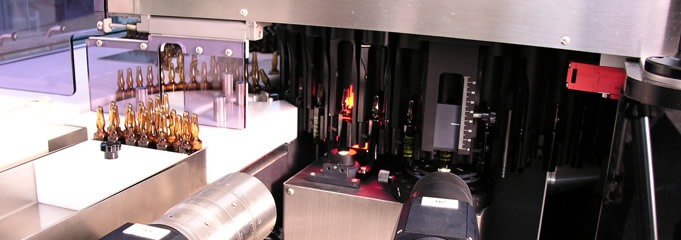


These three independent manufacturing facilities are located on the same eleven-hectare site (27.18 acres), with a total built area of 19,000 m² (4.70 acres). Each facility has its own individual warehouses and they share control and assurance of quality, engineering, maintenance and services, administration, and industrial logistics.
The operational units, managed in an integrated manner through an SAP system, are equipped with state-of-the-art technology and facilities, and carry out their processes according to validated procedures with proven reliability and safety.
The sterile injectable products manufacturing facility features areas qualified according to the highest quality standards, top-tier automated equipment, a continuous packaging line for sterile liquids in ampules and vials, as well as electronic controls and automated inspection systems that ensure the quality of each unit produced.
The liquids manufacturing facility is dedicated to the production of syrups, drops, and suspensions on continuous automated lines with electronic control systems, installed in independent clean areas specifically designed according to the most modern and advanced standards of the pharmaceutical industry.
Cephalosporin products are manufactured in a separate facility dedicated to the production of solid antibiotics for oral administration, in areas and with equipment that are qualified and dedicated exclusively to these pharmaceutical specialties, which meet the highest international standards.
All activities, which entail a high level of commitment and social responsibility, are carried out in strict compliance with GMP standards, ISO 14001 environmental management certification, and continuous innovation programs applied to process development and improvement, ensuring enhanced operational safety and quality.
These facilities hold the Good Manufacturing Practice (GMP) certification granted by the argentine authority ANMAT (National Administration of Drugs, Foods and Medical Devices), valid throughout Mercosur, as well as the equivalent certification granted by Colombia’s INVIMA (National Institute for Drug and Food Surveillance).
These modern facilities and technological equipment are designed for an annual production capacity of 93 million units. More than 300 highly specialized employees, supported by rigorous training and continuous administrative, technical, and professional development, ensure excellence and the quality of its services and products.
Continuous Improvement Program
Laboratorios Roemmers is fully prepared to serve both the domestic and export pharmaceutical markets. In addition, in terms of production, it has implemented a continuous improvement program.
There are several reasons behind the development of this program (which provides for the acquisition of new equipment), but they are mainly focused on modernizing the Argentine industry by incorporating advanced technology.
These systems represent the latest advancement in European pharmaceutical technology and are manufactured in accordance with requirements designed to enable the handling and use of increasingly specialized drugs in the therapeutic field, for their transformation into finished pharmaceutical products.
The production-focused approach and ongoing re-equipment have enabled the manufacturing facilities to comply with cGMP regulations, as well as with the basic conditions necessary to meet quality standards (ISO 9.000) and environmental protection standards (ISO 14.000), an issue to which Roemmers has devoted special attention for many years.
The high level of technology at its manufacturing facilities and the rigor applied to quality assurance led to the need to develop and implement intensive staff training programs, including:
- Training courses for trainers.
- Quality assurance training programs.
- Courses on occupational health and safety, and environmental care.
- Courses on the basic operating standards that govern conduct in sterile areas.
- Staff training and professional development are a core company policy aimed at achieving greater job stability.
The goals of the continuous improvement program are:
-
- To incorporate the latest technology and equipment similar to those used in the most industrialized countries.
- To ensure that the population of Argentina and other communities in the region have access to an up-to-date supply of medical products that reflect the latest discoveries in medical science.
- To ensure full compliance, across all its industrial facilities, with US FDA cGMP (current Good Manufacturing Practices) regulations, as well as ISO 9.000 quality standards and ISO 14000 environmental protection standards.
- To optimize industrial processes by increasing productivity and reducing manufacturing costs.
- To consolidate the leadership and prestige of the products and brands that have positioned Roemmers as the leading company in the Argentine pharmaceutical industry.
- To meet the growing demand for its products in Argentina and across the region.
- To develop a strong competitive position in the Argentine market and throughout Mercosur.
- To reaffirm its reliability across the country and contribute to its economic growth.
